
POS Machine vs Manual Billing: Which Saves More Money for Restaurants?
Many restaurant owners stick with manual billing because it feels familiar and low-cost. But when you add up the hidden losses from billing errors, slow service, stolen cash, and zero sales data — the real question isn't whether you can afford a POS machine. It's whether you can afford not to have one.

Trusted by 5000+ restaurant owners across India
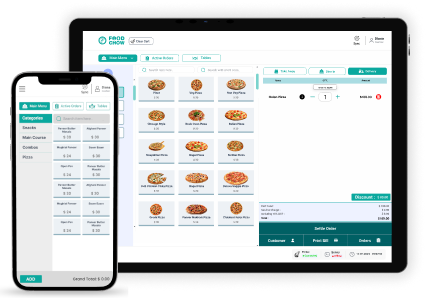
Quick Recommendations Based on Your Current Billing Setup
Tell us how you currently bill your customers and we'll show you the fastest path to saving more money.
CURRENTLY USING PEN & PAPER
Starter POS — Switch in One Day
- Replace handwritten bills instantly
- Reduce calculation errors to zero
- Get your first sales report today
USING BASIC CASH REGISTER
Smart POS with Inventory Tracking
- Go beyond simple billing
- Track stock, staff, and sales in one place
- Integrate with Swiggy & Zomato instantly
ALREADY USING OLDER POS
Modern Cloud POS with Full Analytics
- Replace outdated systems with cloud speed
- Access reports from your phone anywhere
- Multi-branch support built in
Why This Comparison Matters More Than Most Restaurant Owners Realise
At first glance, manual billing looks cheap. A notebook and a pen cost almost nothing. A basic calculator is a one-time purchase. There are no subscriptions, no hardware costs, and no setup required. So why are thousands of restaurant owners across India switching to POS machines every single month?
Because manual billing has hidden costs that never show up in your expense sheet — but quietly drain your profits every day. Billing errors that go in the customer’s favour. Orders forgotten or miscommunicated to the kitchen. Cash shortages at the end of the day that nobody can explain. Menu items sold without being tracked. No data to tell you which dishes are profitable and which are dead weight on your menu.
A POS machine, on the other hand, pays for itself. Faster billing means more table turnovers. Accurate order tracking means fewer kitchen mistakes. Real-time inventory management means less food wastage. Integrated payment options mean fewer cash-handling errors. And detailed daily reports mean you always know exactly where your money is going.
The comparison is not really about upfront cost. It is about total value — and over a 12-month period, the numbers almost always favour a POS machine by a significant margin.
- Expert Verdict - Studies across the restaurant industry show that switching from manual billing to a POS system reduces order errors by up to 80% and improves table turnover speed by 20 to 30%.
What a POS Machine Does That Manual Billing Simply Cannot
These are the capabilities that directly translate into money saved every single day.
Error-Free Billing
Every calculation is automatic. No addition mistakes, no forgotten items, no discounts applied incorrectly. Every bill is accurate, every single time.
Real-Time Sales Reports
Know your revenue, best-selling items, peak hours, and daily totals instantly — without manually tallying receipts at the end of the night.
Inventory Tracking
Stock levels update automatically with every order placed. Know exactly what is running low before it runs out mid-service.
Staff Accountability
Every transaction is logged against a staff login. Reduces cash pilferage, unauthorised discounts, and billing manipulation significantly.
Multiple Payment Modes
Accept cash, UPI, credit cards, and digital wallets seamlessly. Never lose a sale because a customer does not have exact change.
GST & Tax Automation
GST is calculated and applied automatically on every bill. No manual tax errors, no compliance headaches, and reports ready for filing anytime.
How POS Machines Save Money Across Different Restaurant Formats in India
The savings look different depending on your restaurant type — but they are real across the board.
Street Food & High-Volume Stalls
At a busy food stall processing 200 plus orders a day, even one billing error per 20 orders adds up to thousands of rupees in monthly losses. A compact POS eliminates this completely while speeding up each transaction by 30 to 40 seconds.
QSR & Fast Food Outlets
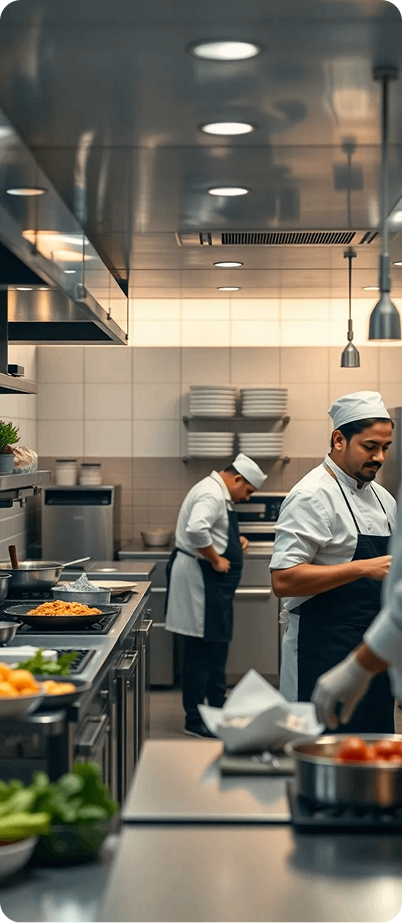
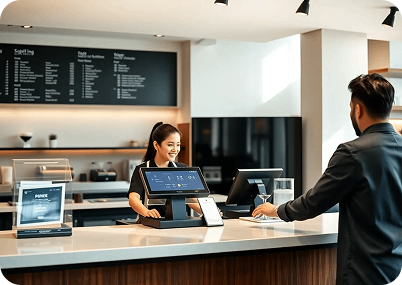
Manual billing during peak lunch and dinner hours creates queues, frustrated customers, and missed orders. A POS with kitchen display integration ensures every order reaches the kitchen accurately and every bill is generated in seconds — directly improving table turnover and revenue per hour.
Fine Dining & Dine-In Restaurants
For higher ticket sizes, billing errors are costly and embarrassing. A POS system ensures split billing, applied discounts, service charges, and GST are all handled correctly — protecting both your revenue and your restaurant's reputation.
POS Machine vs Manual Billing — The Full Cost Comparison
| Feature | Manual Billing | POS Machine |
|---|---|---|
| Setup Cost | Near zero | ₹5,000 – ₹20,000 (one time) |
| Billing Errors | Frequent | Near zero |
| Inventory Tracking | Manual & unreliable | Automatic & real-time |
| Table Turnover Speed | Slow | 20–30% faster |
| Delivery App Integration | Not possible | Swiggy, Zomato & more |
| Long-Term Cost | Higher hidden losses | Pays for itself in months |
Optimized for Bengaluru POS Software
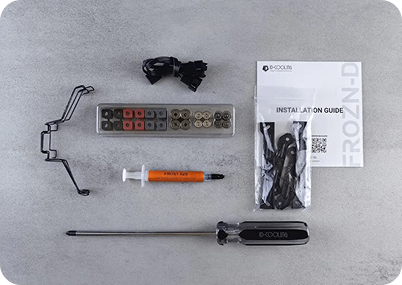
Hardware alone isn’t enough — it needs to work seamlessly with your system.FoodChow printers are fully optimized with POS software to help Bengaluru restaurants:
- Reduce billing time
- Sync orders instantly
- Manage online + offline orders together
Cloud-Ready Infrastructure
Sync 100+ outlets across Bengaluru from a central dashboard.
Real Restaurants, Real Savings
Indiranagar
Dhaba Owner, Lucknow
Switched from handwritten bills to a basic POS after noticing daily cash shortages. Within the first month, identified two recurring sources of revenue leakage and recovered an estimated ₹12,000 in previously untracked losses.
Koramangala
Café Owner, Hyderabad
Was manually tracking inventory in a notebook. Moved to a cloud POS with auto inventory deduction. Reduced monthly food wastage by 25% and cut stock over-ordering costs significantly within 60 days.
HSR Layout
QSR Chain, Chennai
Replaced manual billing across 3 outlets with a unified POS system. Standardised pricing, eliminated staff billing inconsistencies, and consolidated daily reports — saving the owner an estimated 3 hours of manual accounting work every single day.
Explore More Locations
Explore thermal printer solutions across multiple cities and find the perfect setup for your restaurant’s growth.We are providing mutliple services throughout SouthIndia Area
.
SOUTH INDIA
SOUTH INDIA
POS vs Manual Billing — Frequently Asked Questions
Everything you need to know about thermal printers in Bengaluru.
Is a POS machine really worth the investment for a small restaurant?
Yes, even for small restaurants. A basic cloud POS system in India starts from as little as ₹500 to ₹1,000 per month. When you factor in the billing errors it eliminates, the cash it protects, and the time it saves on manual accounting — most small restaurant owners recover the cost within the first 60 to 90 days.
What are the biggest hidden costs of manual billing?
The most damaging hidden costs are billing calculation errors, untracked free items and discounts, cash pilferage by staff, inability to identify slow-moving menu items, and hours lost to manual daily tallying and GST calculations. None of these show up as a line item in your expenses — but collectively they can drain 5 to 15% of your monthly revenue.
Can a POS machine help reduce food wastage?
Absolutely. Real-time inventory tracking means you always know exactly how much stock you have. You stop over-ordering perishables, get alerts when items are running low, and can analyse which dishes consume the most ingredients relative to their profitability — allowing smarter purchasing decisions every week.
Does switching to a POS mean I need to hire technical staff?
No. Modern POS systems are designed to be used by anyone with basic smartphone familiarity. Most providers offer same-day onboarding, video tutorials, and dedicated support — so your existing staff can be trained and operational within a few hours.
How long does it take for a POS machine to pay for itself?
For most restaurants in India, a POS system pays for itself within 2 to 4 months. The combination of reduced billing errors, faster service, better inventory control, and eliminated cash leakage typically generates savings that far exceed the monthly subscription or hardware cost well within the first quarter of use.
Stop Losing Money to Manual Billing — Make the Switch Today
Every day you spend on manual billing is a day of avoidable errors, untracked losses, and missed growth. Join thousands of smart restaurant owners across India who have already made the switch to a smarter, faster, and more profitable way to run their business.